How to Lose Weight for MEPS: A 6-Week Guide for Military Applicants

Updated: Aug 28
Preparing for the Military Entrance Processing Station, commonly known as MEPS, is both exciting and stressful. You may have completed your initial paperwork and spoken with a recruiter. Now, you are planning your future, only to find that your current weight might delay your enlistment process.
For many applicants, being over their branch’s weight or body-composition standard does not mean giving up on a military career. Instead, it means creating a realistic plan, starting early, and consistently working toward the required standard.
This guide explains what to expect during the MEPS weight screening, how to prepare responsibly, common mistakes to avoid, and how the nationwide THINNR® Weight-Loss Protocol may help eligible applicants lose 20 to 30 pounds during a structured six-week program.
Individual results vary. Your recruiter and the applicable military branch determine whether you meet current enlistment requirements.
Are a Few Extra Pounds Delaying Your Military Plans?
You have made the decision to serve. Now it is time to take the next step toward meeting your weight goal. The nationwide THINNR® Weight-Loss Protocol provides eligible participants with a structured six-week plan, provider guidance, progress tracking, recipes, a restaurant guide, and program materials delivered directly to their home.
See If You Qualify
What Is MEPS?
MEPS stands for Military Entrance Processing Station. It is where applicants are evaluated to determine whether they meet the qualifications to enter the United States Armed Forces.
Depending on your enlistment process stage, your MEPS visit may include aptitude testing, a medical examination, background screening, career selection, and the Oath of Enlistment.
The medical evaluation generally includes:
Height and weight measurements
Hearing and vision examinations
Blood and urine testing
Drug and alcohol screening
A review of your medical history
A physical examination
Movement and mobility testing
Your recruiter will explain what documents to bring, how to prepare, and what to expect during your particular appointment.

Understanding Military Height and Weight Requirements
The United States military does not use one universal weight chart for every applicant. Height, weight, body-composition procedures, age categories, and other requirements can differ by service branch and may be updated.
Requirements may apply to applicants entering the:
U.S. Army
U.S. Navy
U.S. Air Force
U.S. Marine Corps
U.S. Coast Guard
U.S. Space Force
Army National Guard
Air National Guard
Military Reserves
Being above a published screening weight does not automatically determine the final outcome of your evaluation. Depending on the branch and its current policies, additional body-composition measurements or other procedures may apply.
Your recruiter is the best source for determining:
Which current standard applies to you
How much weight you may need to lose
Whether a body-composition assessment applies
When you should return for another evaluation
Whether any branch-specific preparation program is available
Do not rely on outdated social media charts or another applicant’s experience. Ask your recruiter to confirm your exact target based on your branch, age, height, sex, and current accession requirements.

Why Weight Can Become a Roadblock Before MEPS
Many applicants begin the enlistment process without realizing their current weight may exceed the screening standard for their height. Others know they need to lose weight but struggle to create a plan they can consistently follow.
Common challenges include:
Not knowing what or how much to eat
Trying multiple diets without a clear structure
Skipping meals and overeating later
Drinking high-calorie beverages
Depending on last-minute crash diets
Losing motivation when progress slows
Not tracking food, weight, or daily habits
Trying to prepare without guidance or accountability
Waiting until a MEPS appointment is already approaching
You may feel highly motivated to serve but still need help developing a more organized weight-loss routine. The goal is not to punish yourself or rely on extreme measures. Instead, follow a structured plan that helps you remain consistent.
How Much Weight Do You Need to Lose for MEPS?
The amount of weight you need to lose depends on your current measurements and the requirements established by your chosen military branch. Some applicants may need to lose only a few pounds. Others may need to lose 10, 20, 30, or more pounds before meeting their target.
Before beginning, ask your recruiter to provide or confirm:
Your official height measurement
The screening weight that applies to you
Whether body-composition measurements may be used
The amount of weight your recruiter recommends losing
Your expected MEPS or follow-up date
Once you understand your target, write it down and divide it into smaller milestones. Tracking smaller changes can make a larger goal feel more manageable and help you recognize your progress along the way.

Start Preparing as Early as Possible
The sooner you begin preparing, the more time you have to establish consistent habits and respond to challenges without depending on dangerous last-minute methods. Your appropriate rate of weight loss can depend on several factors, including:
Your starting weight
Your body composition
Your health history
Your daily activity level
Your nutrition plan
How consistently you follow the program
The amount of weight you need to lose
Individual metabolic differences
Some eligible THINNR® participants may work toward losing 20 to 30 pounds during the six-week protocol. However, no specific result is guaranteed, and results vary significantly from person to person. Applicants should discuss medical conditions, medications, previous eating disorders, pregnancy, or other health concerns with an appropriate licensed healthcare professional before beginning a new weight-loss or exercise program.
Build Consistent Nutrition Habits With the THINNR® App
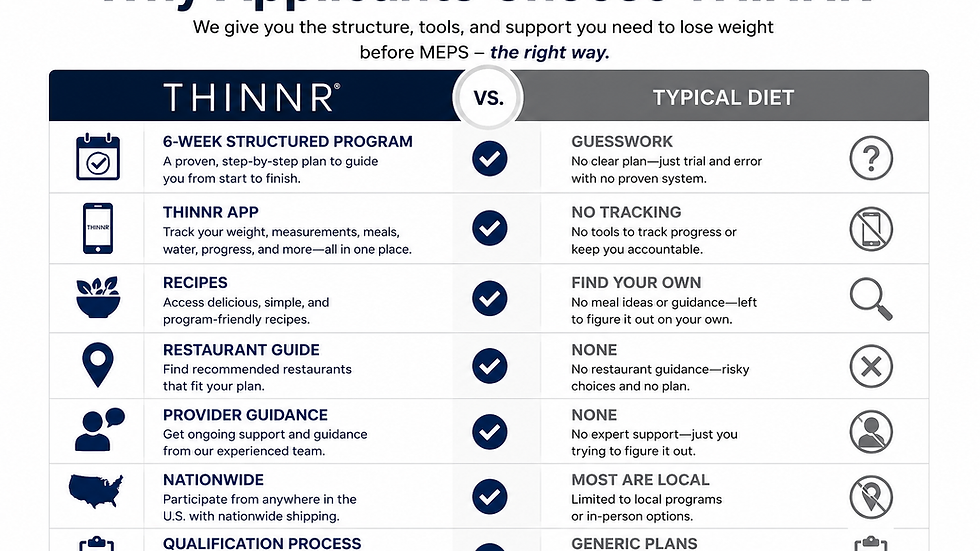
Successful weight loss is about more than simply eating less—it’s about building healthy habits you can follow consistently. The THINNR® App is designed to help participants stay organized, accountable, and focused throughout the six-week program.
Instead of relying on trial and error, the app provides progress tracking, meal guidance, recipes, and helpful resources to support smarter daily decisions. Combined with the THINNR® Protocol, it helps participants develop lasting nutrition habits while working toward their weight-loss and MEPS goals.
Healthy Habits the THINNR® Program Encourages
Plan Meals in Advance: Plan your meals ahead of time, shop with a grocery list, and keep healthy foods readily available to help reduce impulsive eating and stay consistent with your program.
Prioritize Protein: Include an appropriate source of lean protein with your meals to help support fullness and preserve lean body mass while losing weight. The THINNR® Program includes recipes and meal guidance to help you build balanced meals.
Choose Vegetables and Fruits: Fill your meals with vegetables and other nutrient-rich foods that provide essential nutrients while helping you feel satisfied. Limiting highly processed foods can make it easier to stay on track.
Practice Portion Control: Even healthy foods can contribute to excess calorie intake when portions become too large. Follow the serving guidance provided with the THINNR® Protocol and use the THINNR® App to help track your daily habits.
Make Smarter Restaurant Choices: Eating out doesn't have to derail your progress. THINNR® participants receive a Restaurant Guide to help identify healthier menu options before dining out, making it easier to stay on track.
Stay Hydrated: Drink water consistently throughout the day. Keeping a reusable water bottle nearby can help make hydration part of your daily routine.
Track Your Progress: Use the THINNR® App to monitor your weight, daily habits, and overall progress throughout the six-week program. Seeing your progress over time can help you stay motivated, recognize improvements, and remain focused on your goal.
Consistency matters more than perfection. If you have an off day or an occasional indulgence, don’t give up. Return to your plan at your next meal, stay committed, and continue moving toward your MEPS weight goal.

Common Weight-Loss Mistakes to Avoid Before MEPS
Motivation can make applicants feel as though they must do something drastic. Unfortunately, extreme strategies can affect your energy, health, concentration, and ability to train.
Avoid these common mistakes:
Beginning early gives you time to develop habits and make adjustments. Waiting until the final days may encourage unsafe decisions.
Sweat suits, excessive sauna use, fluid restriction, laxatives, and other dehydration methods may be dangerous. Temporary water loss is not the same as sustained fat loss.
Severe restriction may cause fatigue, dizziness, poor concentration, nutrient deficiencies, and overeating later.
Advice from another recruit may not be appropriate for your body, health, branch, or circumstances.
Ignoring pain can turn a manageable problem into an injury that interferes with training or delays your progress.
Do not assume that a product is safe merely because it is marketed as natural, military-friendly, or capable of producing rapid results.
Progress does not require perfection. Review what happened, make the next appropriate choice, and continue following your plan.

How the Nationwide THINNR® Weight-Loss Protocol Works
The nationwide THINNR® Weight-Loss Protocol is designed to provide eligible participants with a structured six-week plan, helpful tools, and ongoing guidance—all from the comfort of home.
Some eligible participants may work toward losing 20 to 30 pounds over the six-week program. Individual results vary, and no particular amount of weight loss is guaranteed.
Step 1: Complete the Qualification Form
Begin by submitting the confidential online qualification form. You will be asked to provide information needed to evaluate whether the program may be appropriate for you.
Step 2: Your Information Is Reviewed
Your submitted information is reviewed as part of the qualification process. Additional information may be requested when necessary.
Step 3: Receive Your Approval and Invoice
If you are approved for the THINNR® Weight-Loss Protocol, you will receive an invoice for the program and products.
Step 4: Receive Your Program Materials
Once payment is received, your program products and materials will be shipped directly to you. You will also receive instructions explaining your next steps.
Step 5: Begin Your Six-Week Protocol
Follow the program instructions, use the included resources, and track your progress through the THINNR App.
Step 6: Stay Connected and Accountable
Provider guidance and program tools help you remain focused throughout the six weeks. Participants should communicate questions or concerns according to the instructions provided with the program.
Step 7: Follow Up With Your Recruiter
Remain in contact with your recruiter throughout your preparation. Your recruiter determines when you should be remeasured or return to MEPS.
How to Stay Motivated While Preparing for MEPS
Losing weight can feel difficult when your enlistment plans depend on the result. Instead of focusing only on the total amount you need to lose, pay attention to the actions you can complete each day.
Remember Why You Started
Write down why military service matters to you. Keep that reason somewhere visible for the days when motivation feels lower.
Track More Than the Scale
Record your weight according to your program instructions, but also notice improvements in energy, food choices, activity, measurements, endurance, and consistency.
Create Smaller Milestones
A large goal becomes more manageable when divided into smaller targets. Recognize each milestone without using food as the reward.
Prepare for Difficult Situations
Decide in advance how you will handle restaurants, family gatherings, travel, long workdays, and unexpected schedule changes.
Ask for Support
Let supportive friends or family members know what you are working toward. You do not need to discuss your weight with everyone, but having encouragement can make the process feel less isolating.
Keep Communicating With Your Recruiter
Your recruiter can clarify current standards, timelines, and next steps. Do not wait until the day before your appointment to ask an important question. Every consistent decision moves you closer to becoming better prepared for MEPS and the physical demands that may follow.
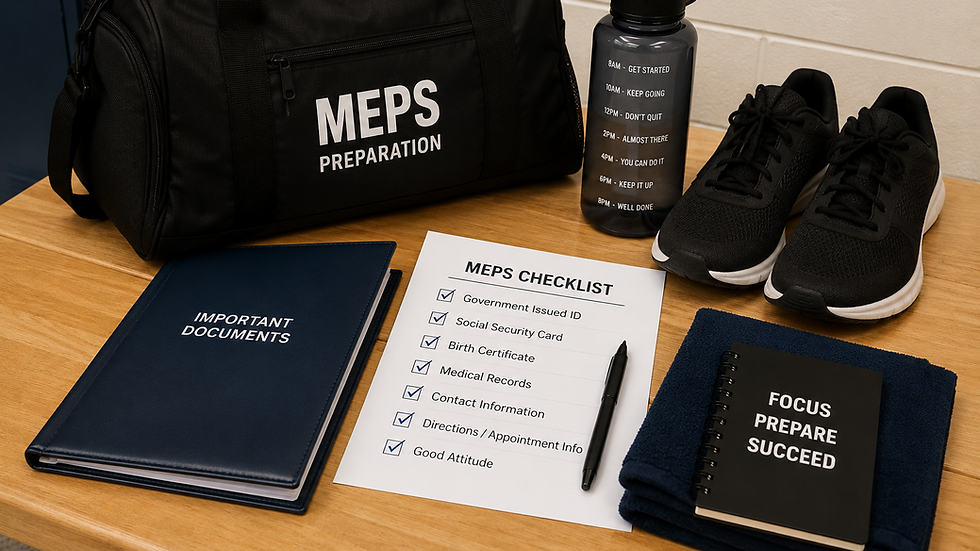
Preparing During the Week Before MEPS
The final week is not the time to begin a crash diet or attempt dangerous weight-cutting practices. Follow the instructions provided by your recruiter and continue the healthy habits you have developed.
During the days before your appointment:
Continue following your established nutrition plan.
Drink water normally unless you have received different medical instructions.
Avoid excessive amounts of salty, highly processed food.
Avoid alcohol.
Do not experiment with unfamiliar supplements or products.
Continue appropriate physical activity without exhausting yourself.
Allow time for rest and recovery.
Get adequate sleep.
Confirm your appointment details with your recruiter.
Gather the documents and items your recruiter instructed you to bring.
Arriving rested, organized, and properly prepared is more responsible than relying on an extreme last-minute attempt to change the scale.
Ready to Take the Next Step Toward MEPS?
If your current weight is delaying your military goals, now is the time to take action. Every pound you lose brings you one step closer to meeting your branch's requirements and moving forward with the enlistment process. Don't let a few extra pounds delay your opportunity to serve.
Complete the THINNR® Qualification Form today to find out if the program may be right for you and take the next step toward your MEPS weight goal.
Complete Your THINNR® Qualification Form Today
The Four Phases of the THINNR® Weight Management Protocol
The THINNR® Weight Management Protocol is more than a weight-loss program; it's a structured journey designed to help eligible participants develop healthier habits, lose weight, and transition into long-term weight management. Each phase has a specific purpose and builds on the progress made during the previous phase.
Phase 1: Metabolic Activation

Purpose:
The first phase focuses on preparing your body for successful weight management by combining the THINNR® nutrition strategy with homeopathic OTC products and healthy lifestyle habits. Participants begin learning how to:
Follow the THINNR® Nutrition Strategy
Build consistent meal-planning habits
Choose nutrient-dense foods
Support healthy metabolism
Track daily progress using the THINNR® App
Develop routines that encourage long-term success
This phase helps establish the foundation for the rest of the six-week program.
Phase 2: Metabolic Thinning

Purpose:
Once healthy routines are established, participants continue following the THINNR® Protocol while remaining consistent with nutrition, hydration, and daily tracking. This phase focuses on:
Following the nutrition strategy consistently
Supporting healthy weight-management habits
Maintaining lean muscle through appropriate nutrition
Monitoring progress with the THINNR® App
Staying motivated and accountable
Many participants notice increased confidence during this stage as they continue working toward their individual goals.
Phase 3: Metabolic Transition

Purpose:
The transition phase helps participants prepare for life after the initial six-week protocol. During this stage, participants continue practicing the healthy habits they've developed while learning how to maintain consistency beyond the structured program. Key focuses include:
Continuing healthy eating habits
Staying physically active
Remaining hydrated
Using the THINNR® App to monitor progress
Building confidence for long-term success
Preparing for the maintenance phase
Phase 4: Metabolic Normalization

Purpose:
The final phase focuses on maintaining progress and making healthy habits part of everyday life. Participants continue emphasizing:
Balanced nutrition
Portion awareness
Daily movement
Healthy hydration
Long-term consistency
Sustainable lifestyle habits
The goal is to help participants transition from a structured program to maintaining healthier routines over time.
Continue Your Journey
Completing the initial six-week THINNR® Weight Management Protocol is only the beginning. Many participants choose to continue with the THINNR® Maintenance Program, where they can continue using maintenance products, the THINNR® App, and the healthy habits they've developed throughout the program.
Long-term success comes from consistency, not perfection.

What is the THINNR® Weight Management Protocol?
The THINNR® Weight Management Protocol is a structured six-week program that combines homeopathic over-the-counter (OTC) products with a nutrition strategy focused on low glycemic index foods, anti-inflammatory eating principles, and time-structured meals. The program also includes provider guidance, meal-planning resources, recipes, the THINNR® App, and ongoing support to help participants build healthier habits. Individual results vary.
What does the THINNR® Protocol include?
The six-week program includes:
Homeopathic OTC products
A structured nutrition strategy
Low glycemic index and anti-inflammatory meal guidance
Time-structured eating recommendations
Recipes and meal-planning tools
Restaurant dining guidance
The THINNR® App for progress tracking
Provider guidance and ongoing support
What type of products does THINNR® use?
THINNR® uses homeopathic over-the-counter (OTC) products formulated according to the Homeopathic Pharmacopeia of the United States (HPUS). Claims for homeopathic products are based on traditional homeopathic practice and have not been evaluated using accepted modern scientific methods.
How is THINNR® different from prescription weight-loss medications?
THINNR® is a structured weight management program that uses homeopathic OTC products and does not require injections or a prescription. In addition to the products, participants receive nutrition guidance, recipes, meal-planning tools, the THINNR® App, and provider support throughout the six-week protocol.
How long is the THINNR® Weight Management Protocol?
The initial THINNR® Weight Management Protocol is a structured six-week program. After completing the program, participants may choose to continue with the THINNR® Maintenance Program to help support their long-term healthy lifestyle goals.
What is the THINNR® Nutrition Strategy?
The THINNR® Nutrition Strategy emphasizes:
Low glycemic index foods
Anti-inflammatory eating principles
Nutrient-dense whole foods
Time-structured meals
Portion awareness
Meal planning
Participants receive food lists, recipes, meal guidance, and educational resources designed to make healthy eating easier throughout the program.
Can I exercise while following the THINNR® Protocol?
In most cases, light to moderate physical activity may be incorporated as part of a healthy lifestyle while following the THINNR® Protocol. Walking, swimming, cycling, stretching, and other appropriate activities are commonly recommended. Exercise recommendations should always be based on your individual health status, fitness level, and the guidance of your healthcare provider.
What happens after I complete the six-week protocol?
Many participants choose to continue with the THINNR® Maintenance Program after completing the initial six-week protocol. The maintenance phase focuses on reinforcing healthy nutrition habits and may include maintenance products, continued provider guidance, and ongoing lifestyle support.
Is THINNR® covered by insurance?
Insurance coverage for weight management programs and homeopathic OTC products varies. Many insurance plans do not cover these types of programs. Some participants may be able to use Health Savings Account (HSA) or Flexible Spending Account (FSA) funds if permitted by their plan administrator. Check with your insurance provider or benefits administrator to determine your eligibility.
Can I go to MEPS if I am overweight?
Your recruiter will determine whether and when you should attend MEPS. Being above a screening weight may lead to additional body-composition procedures, a delay, or another outcome depending on your branch and its current policies.
Does every military branch use the same weight requirements?
No. Height, weight, and body-composition requirements can vary between military branches and may change over time. Always confirm the current standard that applies to you directly with your recruiter.
What happens if I do not meet the MEPS weight requirement?
The outcome depends on your branch, your measurements, body composition, and current military policies. You may require additional measurements, more preparation time, or another evaluation before continuing the enlistment process. Your recruiter can explain the next steps based on your individual situation.
Can I return to MEPS after losing weight?
Yes. If additional weight loss is required, your recruiter will determine when you should return to MEPS and what requirements must be met before another evaluation is scheduled.
How much weight can I lose with THINNR®?
Weight-loss results vary from person to person. Some eligible participants may work toward losing 20 to 30 pounds during the structured six-week protocol, but no specific amount of weight loss is guaranteed.
Is THINNR® available nationwide?
Yes. The THINNR® Weight Management Protocol is available to eligible participants throughout the United States and is designed so many participants can complete the program from home.
Do I have to visit Body Balance in person?
No. Eligible nationwide participants can complete the qualification process remotely and receive their program products and materials by shipment.
Does THINNR® use weight-loss injections?
No. The THINNR® Weight Management Protocol does not use weight-loss injections and does not require needles or a prescription.
Will I receive guidance during the program?
Yes. The program includes provider guidance, the THINNR® App, progress-tracking tools, meal guidance, recipes, and a restaurant guide to help participants follow the six-week protocol.
Is approval automatic?
No. All prospective participants must complete the qualification process. Submission of a qualification form does not guarantee approval.
Does completing THINNR® guarantee that I will pass MEPS?
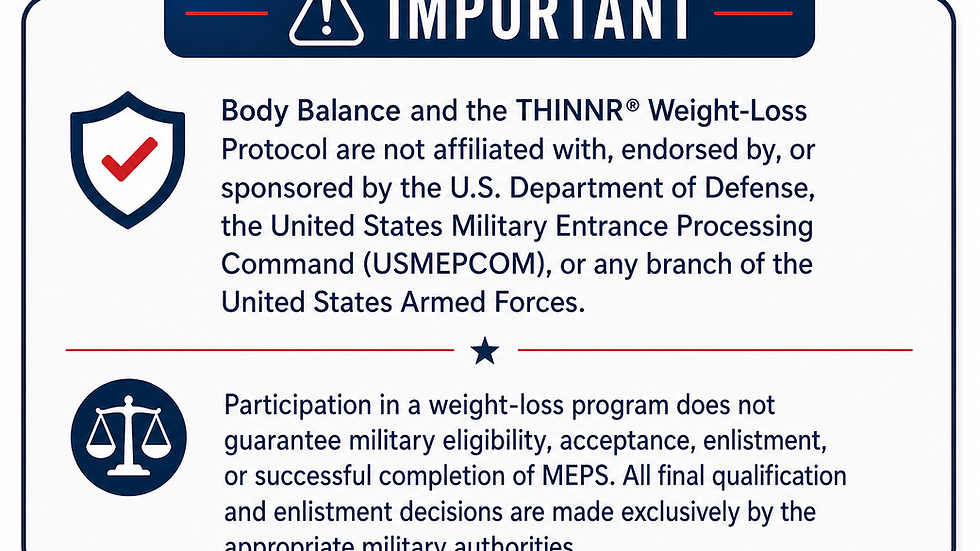
No. Participation in THINNR® does not guarantee military qualification, acceptance, enlistment, or successful completion of MEPS. Military eligibility and enlistment decisions are made solely by the appropriate military authorities.
Should I continue working with my recruiter?
Yes. THINNR® is designed to complement your weight-loss efforts and does not replace your recruiter. Continue communicating with your recruiter regarding current military requirements, appointments, timelines, and enlistment procedures.
Disclaimer

Comments